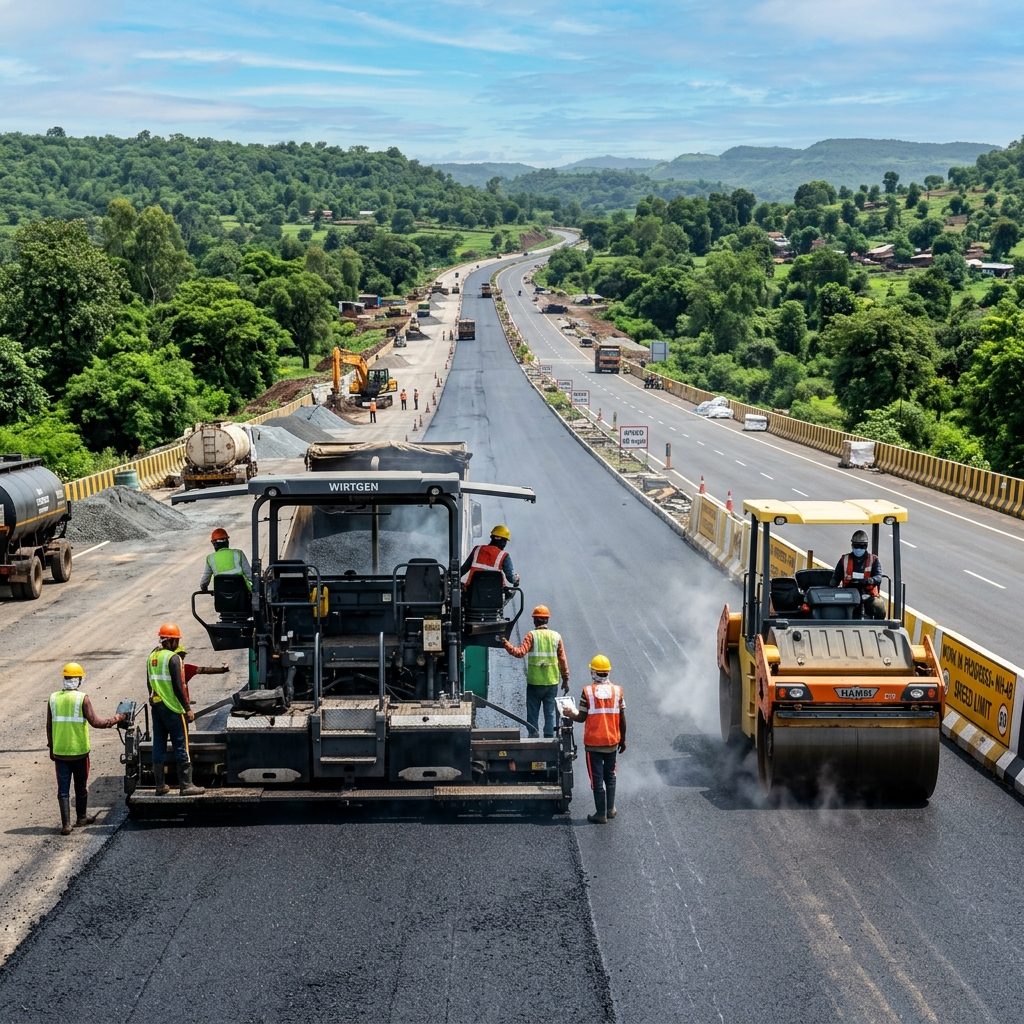
PMB — Polymer Modified Bitumen
High-performance binder for heavy-duty roads (IS 15462:2019)
What is PMB — Polymer Modified Bitumen?
Polymer Modified Bitumen (PMB) is conventional bitumen modified with polymers (commonly SBS) to improve elasticity, temperature resistance, fatigue life and resistance to rutting. It is specified under IS 15462:2019.
PMB is recommended for heavy-traffic pavements — expressways, national highways, urban arterials, junctions and high-rainfall or high-temperature zones — where ordinary bitumen would deform or crack faster.
Benefits
- Resists rutting — holds shape under heavy loads and high heat
- Resists cracking — better low-temperature and fatigue performance
- Longer life — extended pavement service life and lower maintenance
- Better adhesion — improved binding and water resistance
- Standardised — graded as PMB 40 / PMB 70 / PMB 120 per IS 15462:2019
Applications & buyers
- Expressways, national & state highways with heavy commercial traffic
- Stone Matrix Asphalt (SMA) and high-stress wearing courses
- Junctions, toll plazas, ports, climbing lanes (braking/wheel wander)
- High-rainfall and high-temperature road corridors
Specifications
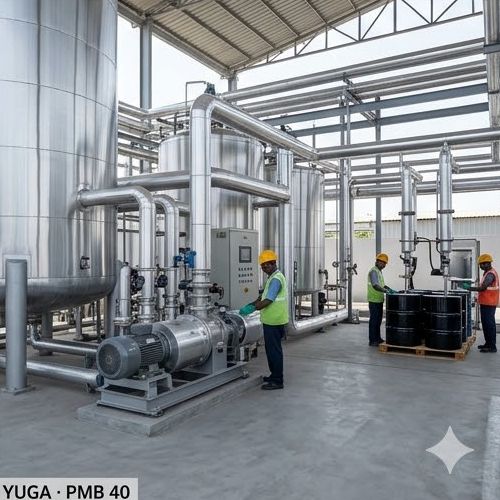
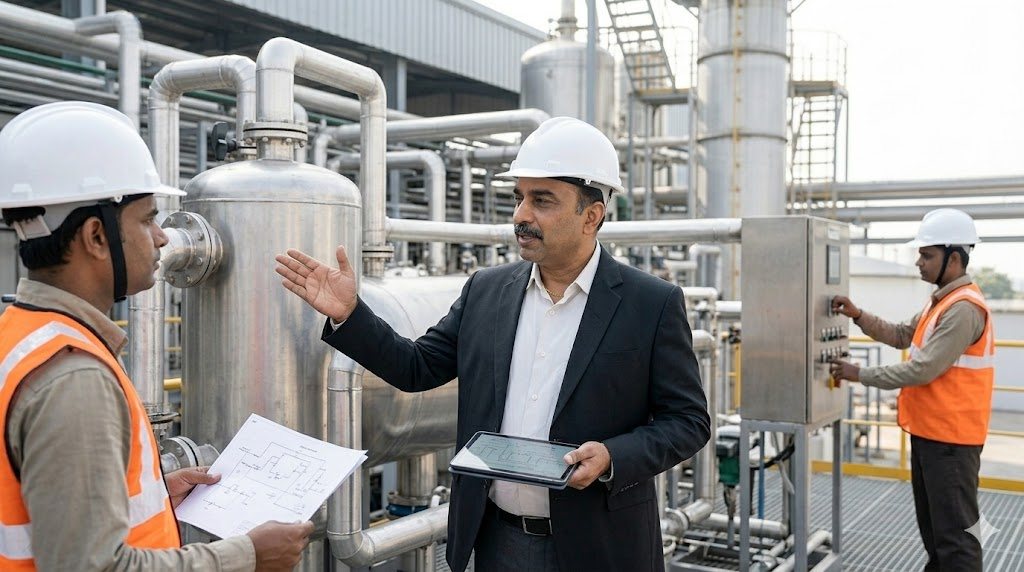
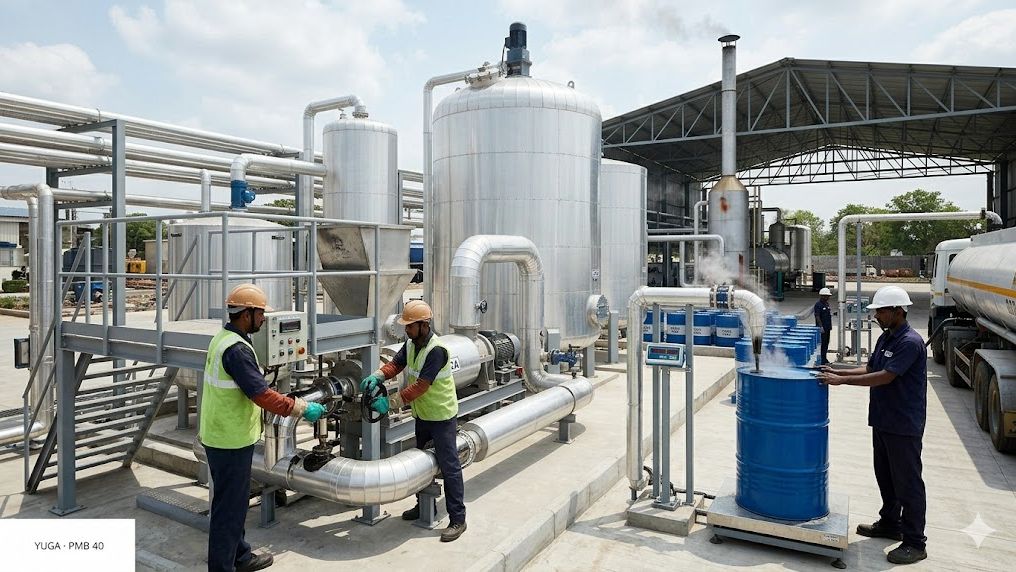
Plant & machinery
What goes in, what comes out.
Per 1 tonne output
Standards & testing.
Cost, output & payback.
Indicative for a PMB blending plant (high turnover, thin margin; large working capital for bitumen).
PMB
Cost & ROIIndicative only — actual figures depend on capacity, location, raw-material price and utilisation. Contact us for an exact DPR.
Figures are for plant supply only — land and working capital are separate — and reflect a batch / semi-continuous build. Fully-continuous, automated, premium-spec production plants cost more (roughly ₹0.8–1.2 Cr per TPD). Your exact cost is fixed in a site-specific DPR.
Best Indian states for this plant.
Expressways & heavy-traffic corridors need high-performance binder; large contractor base.
How much land you'll need.
Indicative plot size by capacity — we lock the exact figure to your layout and feedstock plan during feasibility.
Indicative footprint per capacity tier. Actual plot size depends on layout, feedstock storage, effluent/ZLD provisions, future expansion and statutory setbacks — finalised in the feasibility / DPR stage.
Licences & permissions you'll need.
Core approvals plus the extras specific to this plant — pick your state to see the nodal authority. We handle the full filing as part of PMC.
Licences & permissions
Gujarat PCB + Investor Facilitation Portal (single-window) under the Gujarat Industrial Policy.
Indicative — the exact licence set depends on product, capacity, category (red/orange) and the latest state norms. We handle the full filing as part of PMC. Verify on application.
Extra revenue, and where it's running.
Indicative — actual eligibility, methodology, credit volume and price depend on the registry, feedstock and verification. We structure the MRV pathway as part of PMC; contact us for a project-specific assessment.
Documents & deliverables we provide.
Reports, drawings, working procedures and compliance docs — the full pack that takes the plant from paper to production.
Reports & financials
- Detailed Project Report (DPR)
- Bank DPR + CMA data (bank format)
- 5-year financial model — P&L, balance sheet, cash flow
- ROI / IRR / break-even & sensitivity analysis
- Feasibility & techno-economic report
- Subsidy & loan eligibility memo
Drawings & engineering
- Plant layout & general-arrangement drawings
- Process flow diagram (PFD) & P&ID
- Civil & foundation drawings
- Electrical & utility layout
- Equipment & machinery specification sheets
- Site plan & location scoring
Working & process docs
- Standard Operating Procedures (SOPs)
- Production & blending process manual
- Quality-control test protocols (penetration, softening, ductility)
- Raw-material & input–output (mass balance) sheets
- Operator training & safety manual
- Vendor / OEM list with negotiated pricing
Compliance & market
- Licence & permission checklist (product + state)
- Standards pack — IS / ASTM / MSDS
- Tender & empanelment documentation (NHAI / PWD)
- Buyer network & sales-support pack
- Carbon-credit MRV documentation (optional)
Exact deliverables are scoped per engagement and product. The full pack is provided as part of PMC — contact us for a project-specific document list.
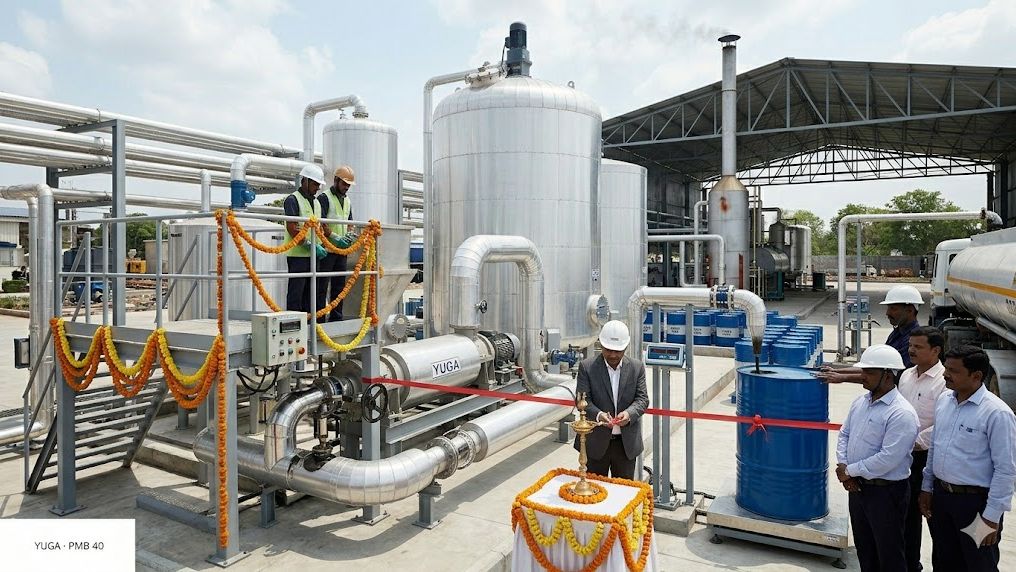
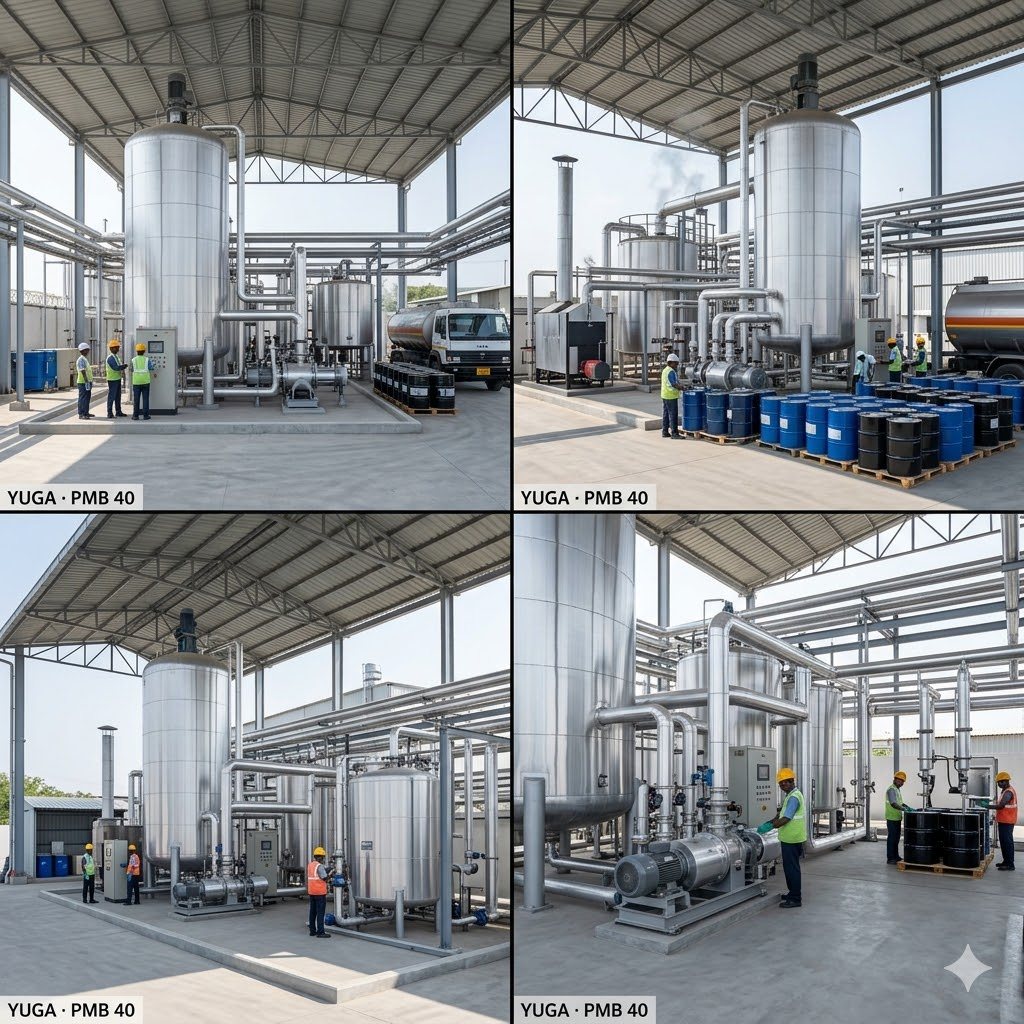
One plant, four angles.
Front, both sides and the working floor — the same facility from every angle.
Top questions, answered.
Bitumen modified with polymer (usually SBS) to make roads stronger, more elastic and longer-lasting.
Pairs well with.
Plan your PMB — Polymer Modified Bitumen plant with YUGA.
From feasibility to first commercial production - and the capital to fund it.