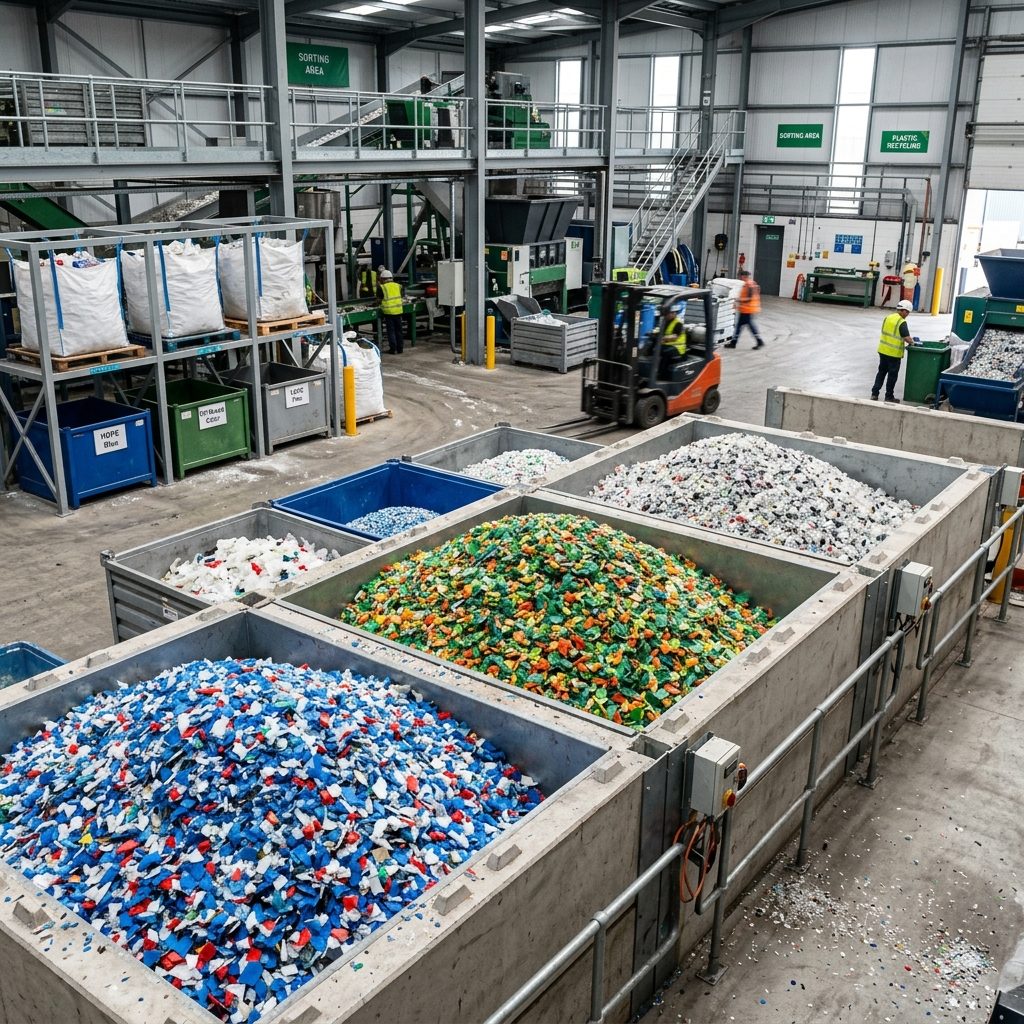
Plastic-to-Fuel (Plastic Pyrolysis)
Converting waste plastic into pyrolysis oil, gas and char
What is Plastic-to-Fuel (Plastic Pyrolysis)?
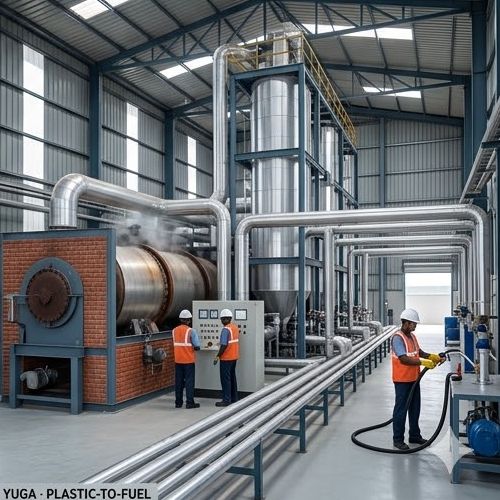
Plastic-to-fuel uses pyrolysis — heating mixed/non-recyclable plastic waste in the absence of oxygen — to produce pyrolysis oil (a fuel/feedstock), combustible gas (reused for heating) and carbon char. It turns a waste-management problem into a revenue stream.
The business is supported by India's Plastic Waste Management Rules, Extended Producer Responsibility (EPR) and the single-use-plastic ban, which create strong feedstock availability and policy backing.
Benefits
- Solves waste — diverts non-recyclable plastic from landfill and oceans
- Multiple revenue — pyrolysis oil, off-gas (self-fuel) and carbon char
- Low feedstock cost — plastic waste is cheap and abundant
- Policy support — EPR + SUP ban drive demand for plastic processing
- Fast ROI — well-run units report payback within ~2–3 years
Applications & buyers
- Pyrolysis oil sold as industrial furnace/boiler fuel or refinery feedstock
- Carbon char used in low-grade carbon / brick / fuel applications
- Off-gas recycled to fire the reactor (lower running cost)
- EPR / circular-economy compliance projects for brand owners
Specifications
Plant & machinery
What goes in, what comes out.
Per 10 TPD plastic input
Standards & testing.
Cost, output & payback.
Indicative for a ~5–10 TPD plastic pyrolysis unit.
Plastic-to-Fuel
Cost & ROIIndicative only — actual figures depend on capacity, location, raw-material price and utilisation. Contact us for an exact DPR.
Figures are for plant supply only — land and working capital are separate — and reflect a batch / semi-continuous build. Fully-continuous, automated, premium-spec production plants cost more (roughly ₹0.8–1.2 Cr per TPD). Your exact cost is fixed in a site-specific DPR.
Best Indian states for this plant.
High urban plastic-waste generation, industrial furnace-oil demand, supportive PCBs.
How much land you'll need.
Indicative plot size by capacity — we lock the exact figure to your layout and feedstock plan during feasibility.
Indicative footprint per capacity tier. Actual plot size depends on layout, feedstock storage, effluent/ZLD provisions, future expansion and statutory setbacks — finalised in the feasibility / DPR stage.
Licences & permissions you'll need.
Core approvals plus the extras specific to this plant — pick your state to see the nodal authority. We handle the full filing as part of PMC.
Licences & permissions
Gujarat PCB + Investor Facilitation Portal (single-window) under the Gujarat Industrial Policy.
Indicative — the exact licence set depends on product, capacity, category (red/orange) and the latest state norms. We handle the full filing as part of PMC. Verify on application.
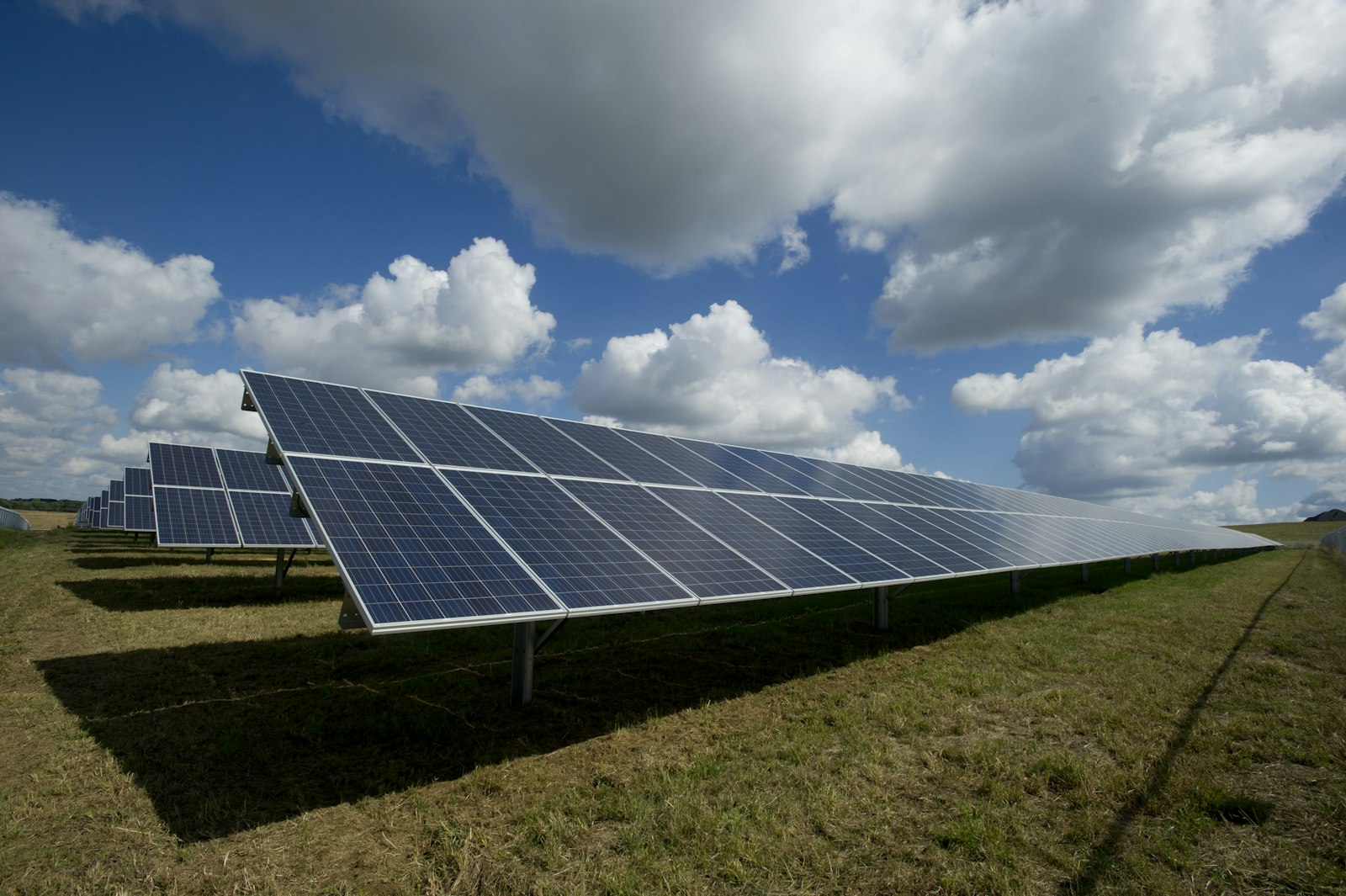
Extra revenue, and where it's running.
Indicative — actual eligibility, methodology, credit volume and price depend on the registry, feedstock and verification. We structure the MRV pathway as part of PMC; contact us for a project-specific assessment.
Documents & deliverables we provide.
Reports, drawings, working procedures and compliance docs — the full pack that takes the plant from paper to production.
Reports & financials
- Detailed Project Report (DPR)
- Bank DPR + CMA data (bank format)
- 5-year financial model — P&L, balance sheet, cash flow
- ROI / IRR / break-even & sensitivity analysis
- Feasibility & techno-economic report
- Subsidy & loan eligibility memo
Drawings & engineering
- Plant layout & general-arrangement drawings
- Process flow diagram (PFD) & P&ID
- Civil & foundation drawings
- Electrical & utility layout
- Equipment & machinery specification sheets
- Site plan & location scoring
Working & process docs
- Standard Operating Procedures (SOPs)
- Production & blending process manual
- Quality-control test protocols (penetration, softening, ductility)
- Raw-material & input–output (mass balance) sheets
- Operator training & safety manual
- Vendor / OEM list with negotiated pricing
Compliance & market
- Licence & permission checklist (product + state)
- Standards pack — IS / ASTM / MSDS
- Tender & empanelment documentation (NHAI / PWD)
- Buyer network & sales-support pack
- Carbon-credit MRV documentation (optional)
Exact deliverables are scoped per engagement and product. The full pack is provided as part of PMC — contact us for a project-specific document list.
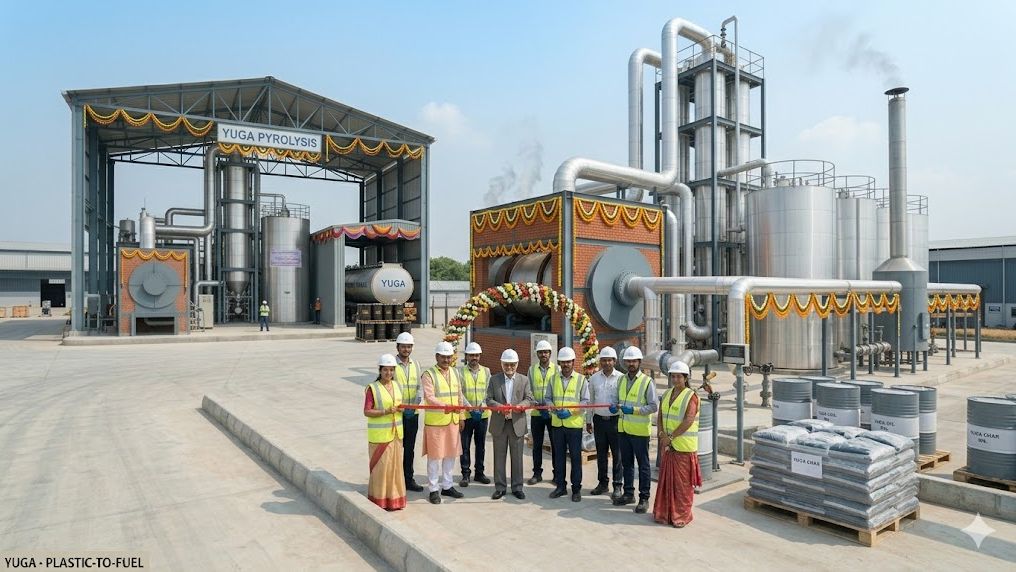
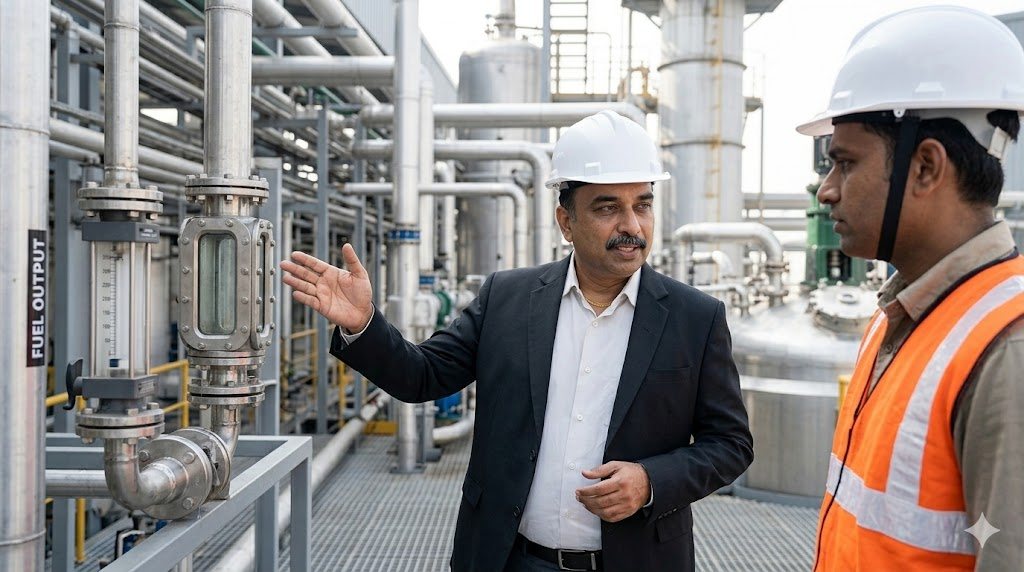
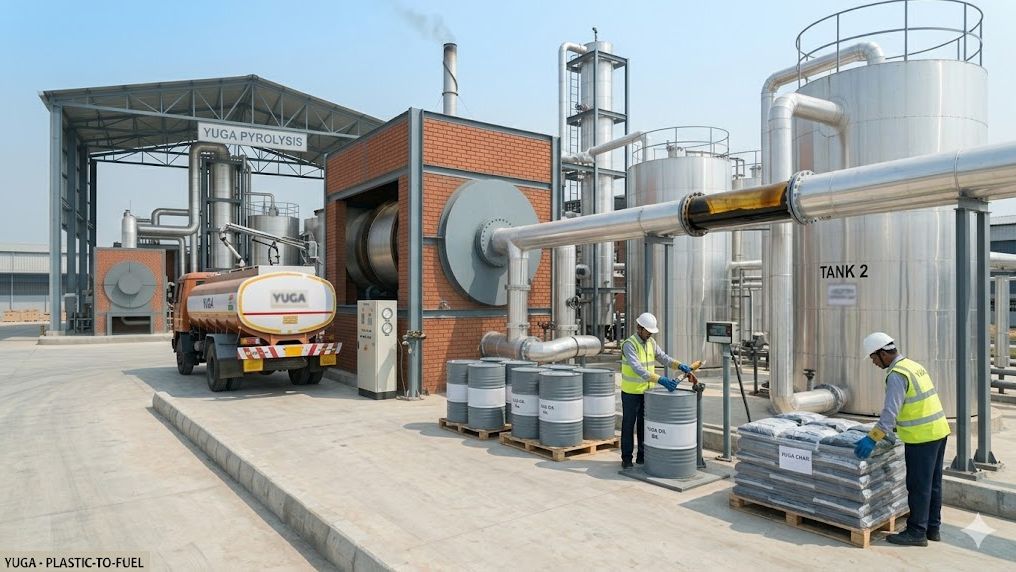
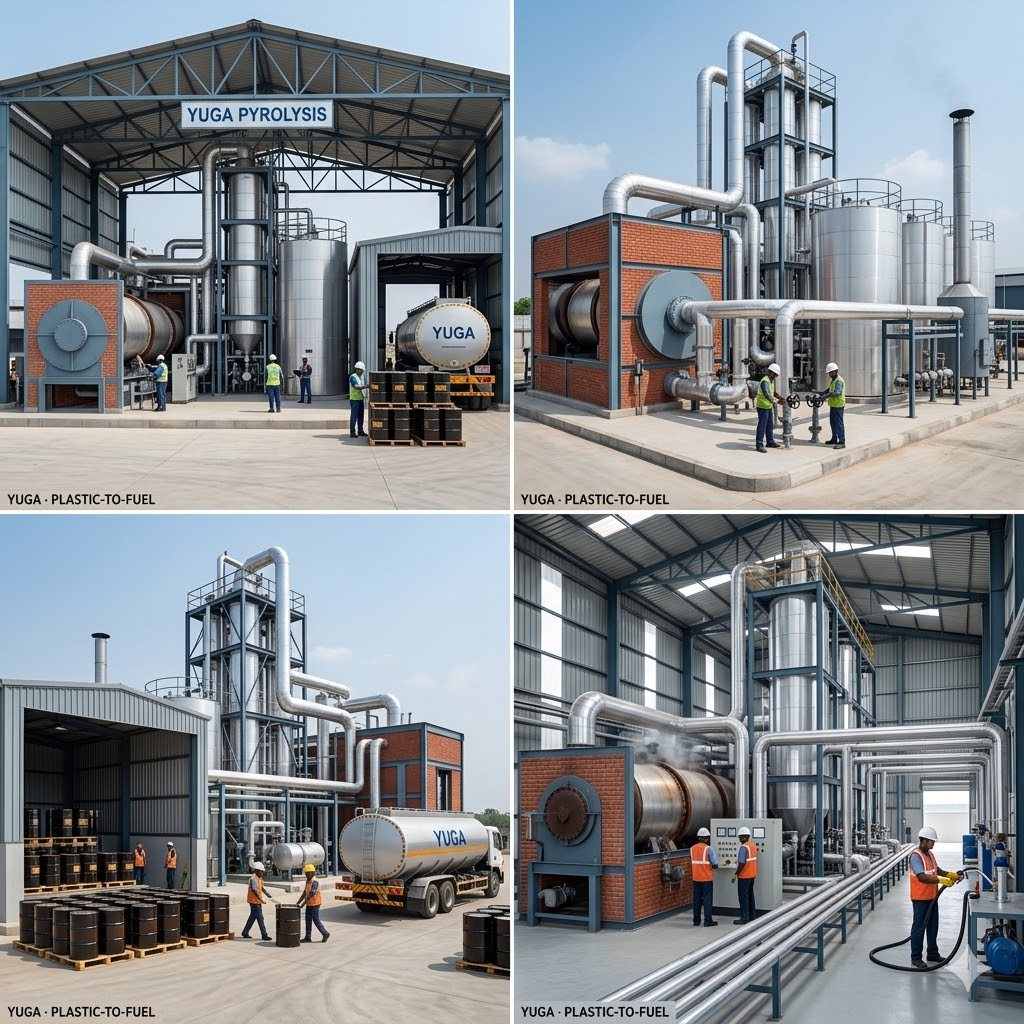
One plant, four angles.
Front, both sides and the working floor — the same facility from every angle.
Top questions, answered.
A pyrolysis process that converts waste plastic into pyrolysis oil, gas and char without burning it in open air.
Pairs well with.
Plan your Plastic-to-Fuel (Plastic Pyrolysis) plant with YUGA.
From feasibility to first commercial production - and the capital to fund it.